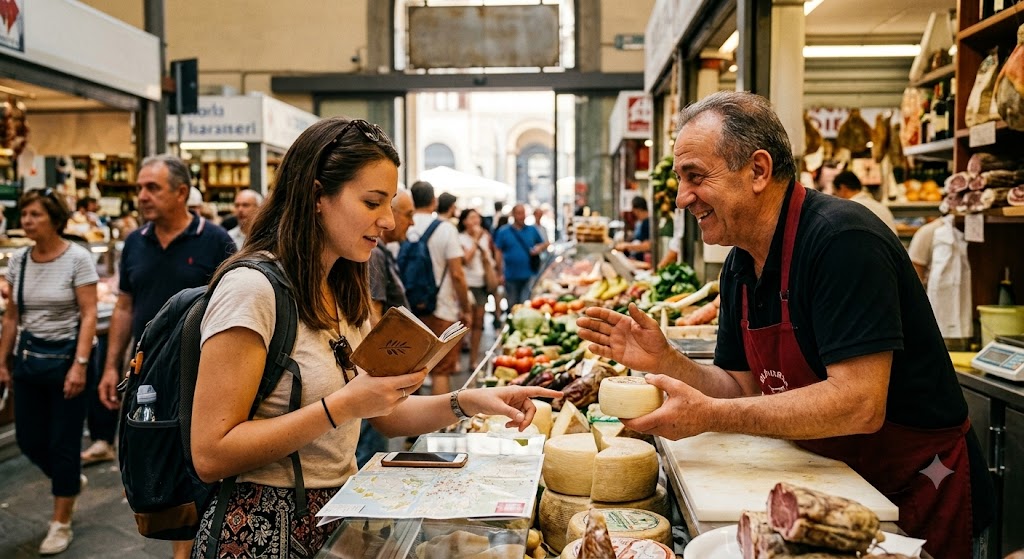
Traveling to a new country is exciting, but it can also come with a few language challenges. While translation apps and guidebooks can help, learning a few simple phrases before you arrive can make a surprising difference. Even a small effort to speak the local language often leads to friendlier interactions and smoother travel experiences.
You do not need to memorize long conversations. In fact, seasoned travelers say that just a handful of practical words and phrases can help you navigate most everyday situations. Whether you are asking for directions, ordering food, or handling an unexpected situation, these simple phrases can be incredibly useful.
Here are a few of the most helpful ones to know:
Everyday basics: Hello / Good morning / Good evening / Please / Thank you / Excuse me / I’m sorry
Getting around: Where is the restroom? / Where is the train station? / Where is the bus stop? / How much does this cost? / Which way is? / Is it far?
Safety and health: Help / I am allergic to/ I need a doctor / hospital / police
Most importantly, do not be afraid to try. Even if your pronunciation is not perfect, people usually appreciate the effort, and a few simple words can make traveling abroad much easier and more enjoyable.
 The data relating to real estate on this website comes in part from the MLS® Reciprocity program of either the Greater Vancouver REALTORS® (GVR), the Fraser Valley Real Estate Board (FVREB) or the Chilliwack and District Real Estate Board (CADREB). Real estate listings held by participating real estate firms are marked with the MLS® logo and detailed information about the listing includes the name of the listing agent. This representation is based in whole or part on data generated by either the GVR, the FVREB or the CADREB which assumes no responsibility for its accuracy. The materials contained on this page may not be reproduced without the express written consent of either the GVR, the FVREB or the CADREB.
Comments:
Post Your Comment: