C
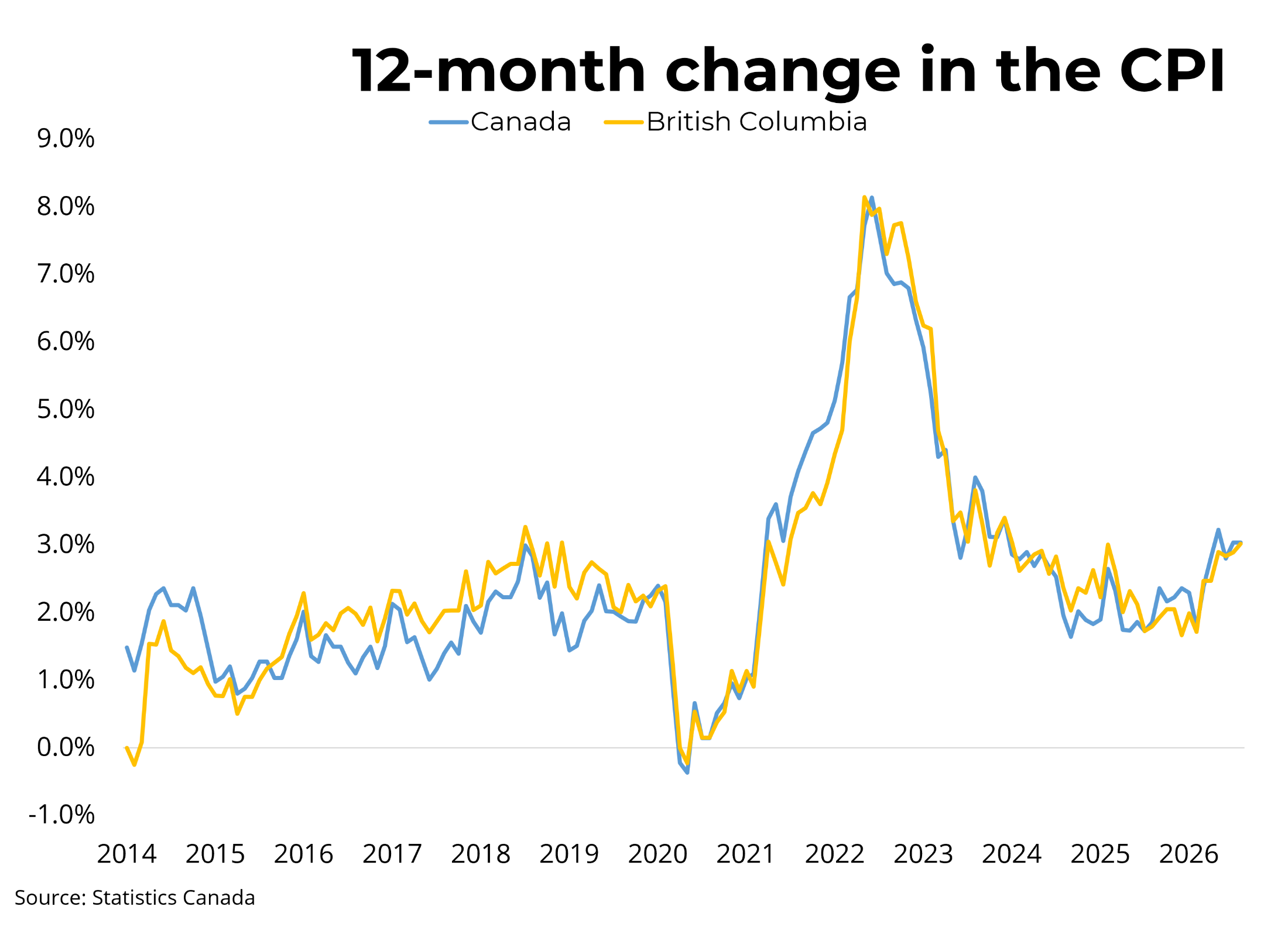
anadian prices, as measured by the Consumer Price Index (CPI), rose 3.1 per cent on a year-over-year basis in September, following a 3 per cent increase in August. On a seasonally adjusted monthly basis, the CPI was up 0.4 per cent in September. The CPI ex-gasoline increased by 2.2 per cent in September after rising by 2.4 per cent in August. Meanwhile, grocery price growth has decelerated in recent months, slowing to 1.7 per cent in September, the slowest yearly increase in over two years. In BC, consumer prices rose by 3 per cent year-over-year in September, matching the previous month. The Bank of Canada's preferred measures of median and trimmed inflation, which strip out volatile components, rose by 1.9 per cent and 1.8 per cent year-over-year, marginally lower than the previous month’s increase.
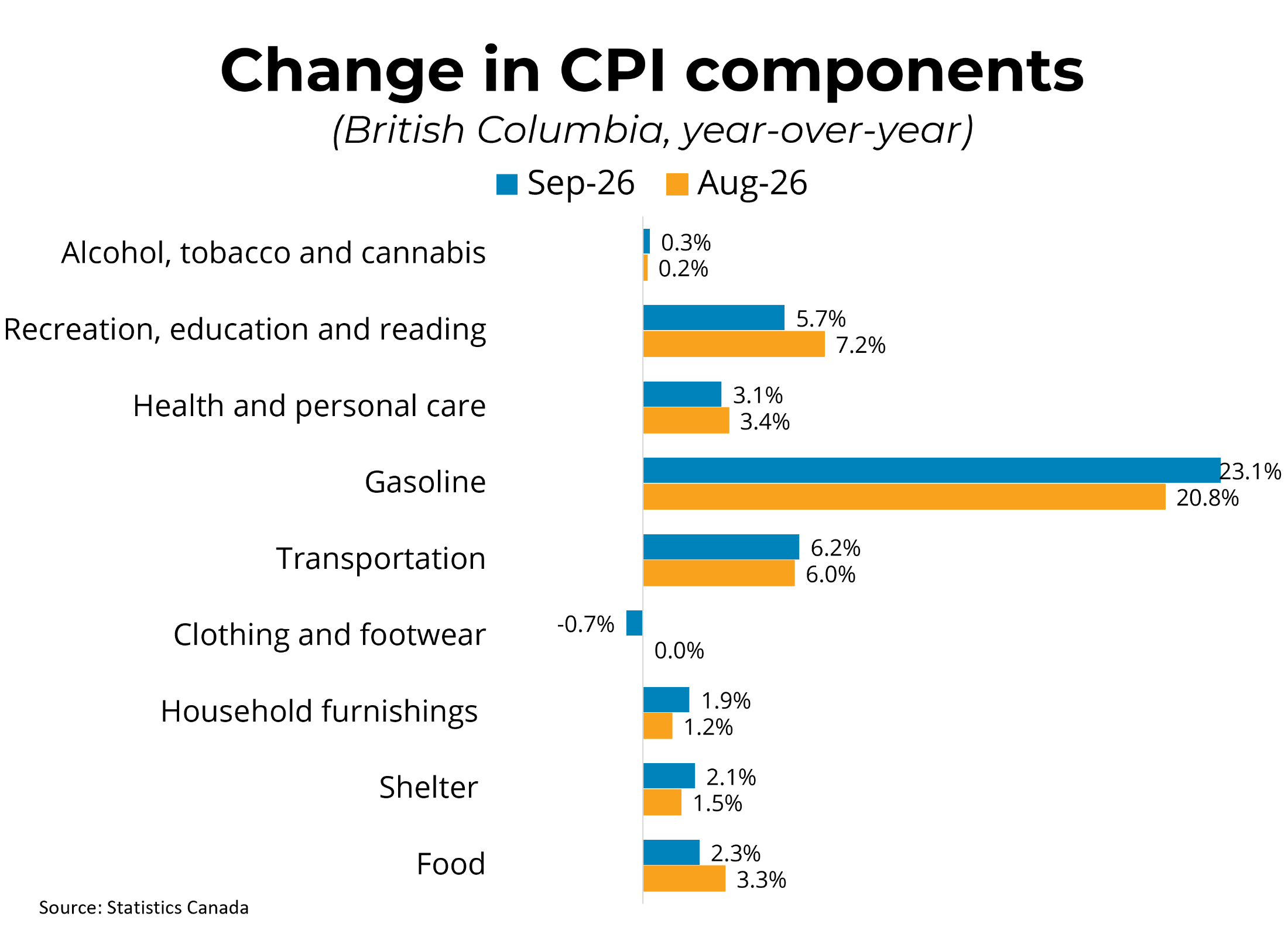
As has been the story since March, headline CPI acceleration remains driven by higher gasoline prices due to the oil price shock from the ongoing Iran conflict. Looking at major components, upward pressure on gas and diesel prices continues to affect transportation costs, which rose by over 8 per cent year-over-year in September. As capacity pressures on refineries worsen, the risk of these costs percolating into other components grows, which the Bank of Canada continues to monitor as its next meeting approaches. Furthermore, 3-month annualized core inflation has been on an upswing since June, increasing to about 2.65 per cent in September, above the Bank’s 2 per cent target. Paired with these risks, the Bank is facing an economy and labour market moving in opposite directions, with the latter having lost over 100,000 jobs in the last two months. Although this report supports a potential rate hike, we tentatively expect another rate hold next week from the Bank. While some may argue that rate hikes won’t quell the inflationary pressures facing the economy, we still expect the Bank to eventually raise its policy rate to 2.75 per cent (the midpoint of its neutral range) by mid-2027.
 The data relating to real estate on this website comes in part from the MLS® Reciprocity program of either the Greater Vancouver REALTORS® (GVR), the Fraser Valley Real Estate Board (FVREB) or the Chilliwack and District Real Estate Board (CADREB). Real estate listings held by participating real estate firms are marked with the MLS® logo and detailed information about the listing includes the name of the listing agent. This representation is based in whole or part on data generated by either the GVR, the FVREB or the CADREB which assumes no responsibility for its accuracy. The materials contained on this page may not be reproduced without the express written consent of either the GVR, the FVREB or the CADREB.
Comments:
Post Your Comment: