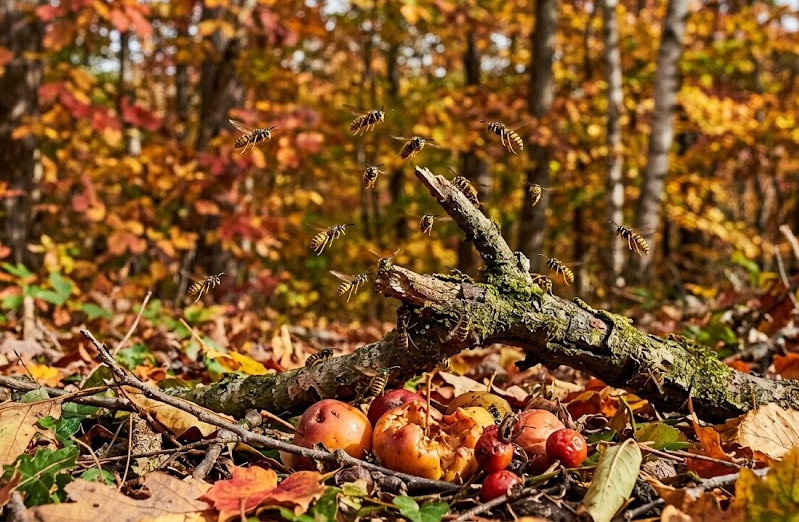
Yellow jackets become much more active in the fall as their natural food supply disappears, sending them in search of sweet drinks, barbecue foods, and trash bins. That is why they are a common sight at outdoor gatherings this time of year.
Unlike bees, yellow jackets can sting multiple times. Most stings cause temporary pain and swelling, but some people may experience serious allergic reactions, including breathing problems or dizziness. They are also known for their fast, darting flight patterns and bright yellow and black markings.
To avoid trouble, keep food covered, seal trash containers, and stay calm if one flies nearby. With a little caution, you can still enjoy the fall season without unwanted stings.
 The data relating to real estate on this website comes in part from the MLS® Reciprocity program of either the Greater Vancouver REALTORS® (GVR), the Fraser Valley Real Estate Board (FVREB) or the Chilliwack and District Real Estate Board (CADREB). Real estate listings held by participating real estate firms are marked with the MLS® logo and detailed information about the listing includes the name of the listing agent. This representation is based in whole or part on data generated by either the GVR, the FVREB or the CADREB which assumes no responsibility for its accuracy. The materials contained on this page may not be reproduced without the express written consent of either the GVR, the FVREB or the CADREB.
Comments:
Post Your Comment: