August is a season of transition in the garden. The bright energy of summer begins to soften, evenings grow a little cooler, and plants quietly prepare for the arrival of fall. One of the most important late-summer plants is milkweed, a wildflower often overlooked despite the life it supports.
Most famous for hosting monarch butterfly caterpillars, milkweed is the only plant monarchs rely on to lay their eggs and feed their young. By August, its leaves are often covered with striped caterpillars preparing for transformation. Milkweed also protects them naturally through compounds called cardenolides, which make the monarch less appealing to predators.
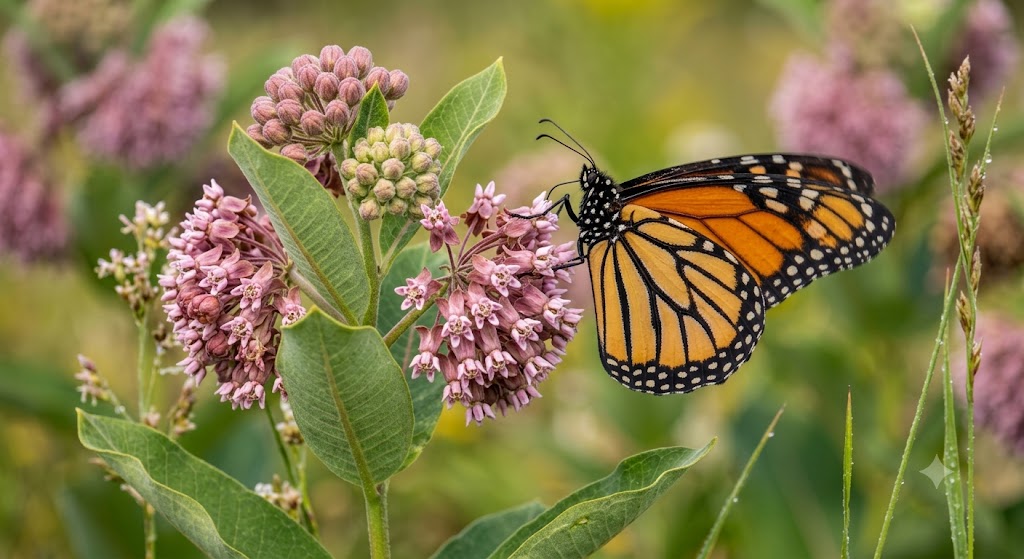
But monarchs are only part of milkweed’s story. Bees, moths, birds, and countless pollinators depend on their fragrant lavender blooms and nourishing habitat. As summer winds down, the flowers give way to seed pods that eventually burst open, sending silky seeds drifting through the warm late-summer air.
Milkweed reminds us that some of the most valuable things in nature are often the easiest to overlook. As August bridges the fullness of summer with the approach of autumn, it offers a quiet reminder that growth, change, and renewal are always happening just beneath the surface.
Late summer has a way of slowing us down enough to notice the details we may have missed earlier in the season, from drifting seed pods to the steady work of pollinators preparing for what comes next.
In many ways, gardens in August are not simply winding down. They are preparing, adapting, and carrying the beauty of one season forward into another.
 The data relating to real estate on this website comes in part from the MLS® Reciprocity program of either the Greater Vancouver REALTORS® (GVR), the Fraser Valley Real Estate Board (FVREB) or the Chilliwack and District Real Estate Board (CADREB). Real estate listings held by participating real estate firms are marked with the MLS® logo and detailed information about the listing includes the name of the listing agent. This representation is based in whole or part on data generated by either the GVR, the FVREB or the CADREB which assumes no responsibility for its accuracy. The materials contained on this page may not be reproduced without the express written consent of either the GVR, the FVREB or the CADREB.
Comments:
Post Your Comment: