I have sold a property at 1170 Fulton Avenue in West Vancouver on May 4, 2026. See details here
I have sold a property at 1170 Fulton Avenue in West Vancouver on May 4, 2026. See details here
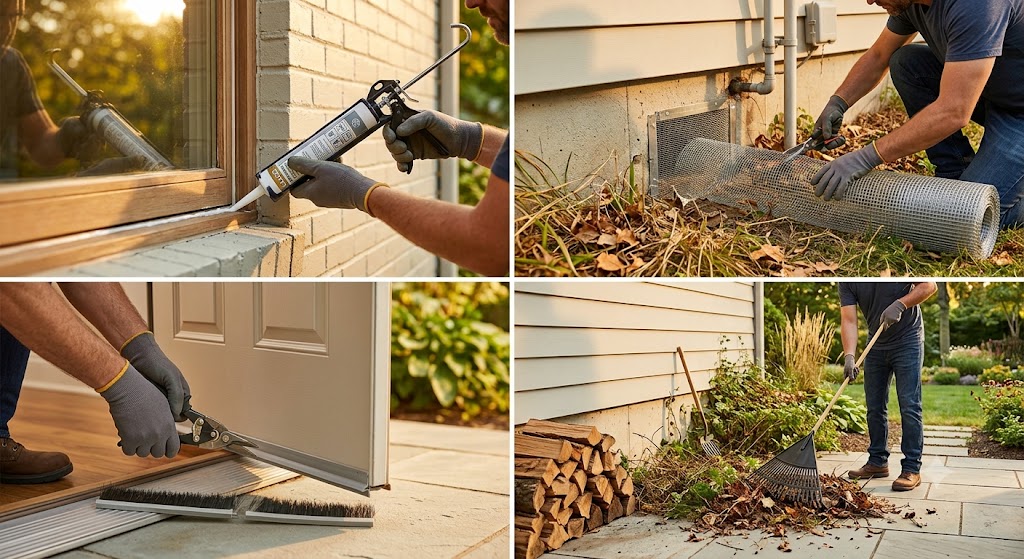
As August begins to wind down, many insects and rodents start searching for warm places to shelter before cooler weather arrives. Unfortunately, homes often become the perfect target. Taking a few preventative steps now can help keep unwanted pests from moving indoors later in the season. Late summer is the ideal time to seal up small openings, reduce moisture, and clear away outdoor areas where pests like to hide before fall temperatures send them searching for warmth. Even small cracks around doors, windows, and foundations can provide easy access once the weather cools. Rodents can squeeze through surprisingly tiny openings, making early prevention especially important. A little preparation now can help prevent larger and more costly problems later.
Seal cracks and gaps. Inspect the outside of your home for small openings around windows, foundations, doors, and utility pipes. Even tiny gaps can give pests a way inside.
Repair screens and door sweeps. Damaged window screens and worn door sweeps make it easier for insects and rodents to enter as temperatures begin to cool.
Trim plants away from the house. Overgrown shrubs, tree branches, and garden debris create hiding places for pests and easy pathways into the home.
Store firewood properly. Keep firewood, lumber, and other stacked materials at least twenty feet away from the house whenever possible.
Keep moisture under control. Damp basements, crawl spaces, and clogged gutters can attract insects. Use dehumidifiers if needed and make sure water drains away from the home.
Keep food sealed and surfaces clean. Crumbs, pet food, and unsealed pantry items can quickly attract pests searching for shelter and food sources.
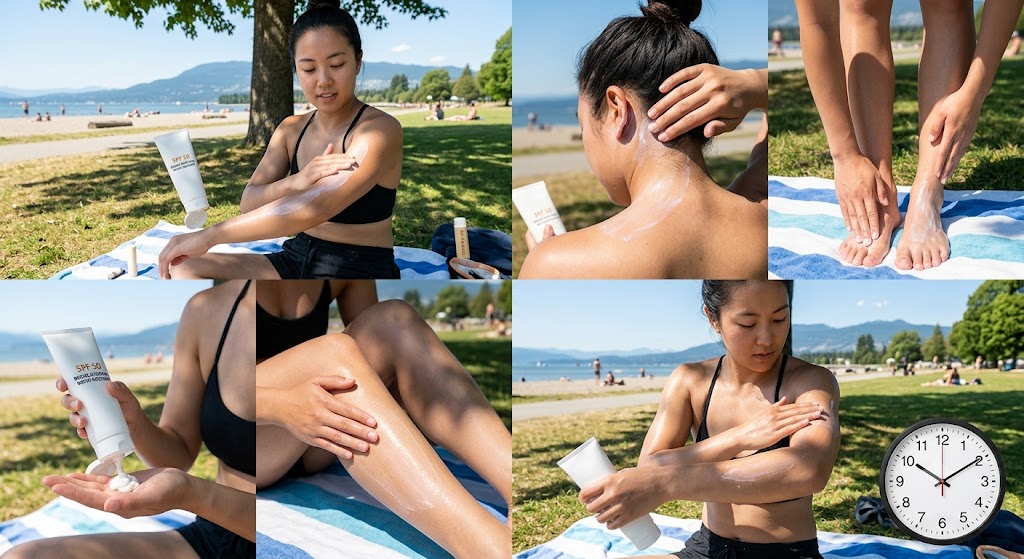
Most people believe they use sunscreen properly, but health experts say many still apply too little or forget to reapply often enough. As August brings some of the strongest sun exposure of the year, protecting your skin remains just as important as it was at the start of summer.
Dermatologists recommend choosing a broad-spectrum, water-resistant sunscreen with SPF 30 or higher. Apply it at least fifteen minutes before going outdoors and make sure to cover commonly missed areas like the ears, scalp, shoulders, lips, and the backs of the legs. Lip balm with SPF protection can help prevent sun damage to sensitive skin around the mouth.
How sunscreen is applied matters, too. Lotion sunscreen should be used generously, about a shot glass amount for the entire body. Spray sunscreen should be applied until the skin visibly glistens, then rubbed in evenly for full coverage. Sunscreen sticks require several passes over the skin to provide proper protection.
Most importantly, sunscreen does not last all day. Reapply every two hours, especially after swimming or sweating.
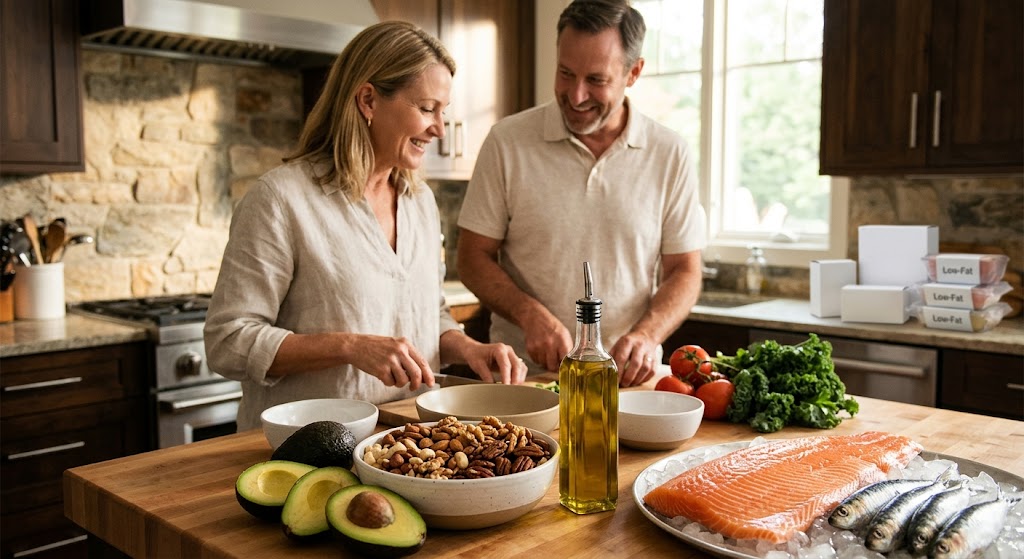
For years, fat was treated as the enemy of healthy eating. Low-fat products dominated grocery shelves throughout the 1980s and 1990s, leading many people to believe that all fat was unhealthy. Today, nutrition experts understand things very differently.
One of the biggest myths is that eating fat automatically causes weight gain. In reality, weight gain happens when the body takes in more calories than it burns, regardless of the source. Healthy fats found in foods like avocados, nuts, olive oil, and fish can actually help people feel fuller longer and support a balanced diet.
Another common misconception is that all fats harm the heart. In truth, unsaturated fats are considered beneficial for cardiovascular health, while trans fats and heavily processed foods remain the biggest concern. Moderation and overall eating habits matter far more than avoiding fat completely.
As late summer gives way to fall routines, it may be the perfect time to leave a few outdated food myths behind and focus on healthier, more balanced choices.
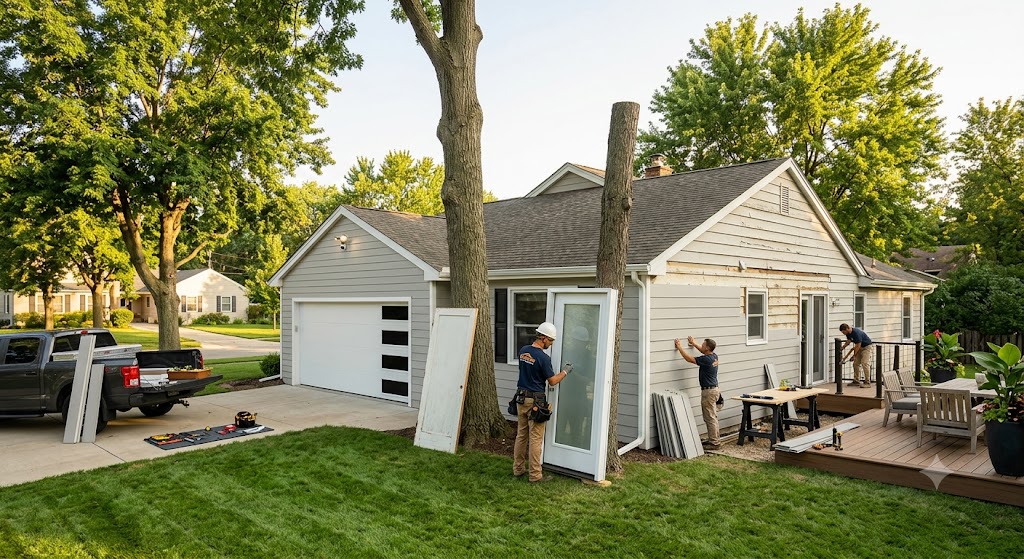
Late summer is one of the most popular times of year for home improvement projects. With fall approaching, many homeowners use August to finish upgrades, improve energy efficiency, and prepare their homes for the cooler months ahead. The good news is that some remodeling projects not only improve daily living but can also add real resale value.
According to Remodeling magazine’s Cost vs. Value Report, exterior improvements continue to offer some of the best returns. New siding, updated entry doors, and modern garage doors can instantly refresh curb appeal before autumn arrives.
Energy-efficient upgrades are also in high demand. Installing an electric heat pump or Energy Star windows can help reduce heating and cooling costs throughout every season, while some projects may qualify for valuable tax credits.
Functional spaces remain especially important to buyers. Dedicated laundry rooms, inviting patios, organized garage storage, and professionally installed outdoor lighting continue to rank high on homeowner wish lists. As summer begins to wind down, August is the perfect time to invest in improvements that make a home feel more comfortable, efficient, and ready for the seasons ahead.
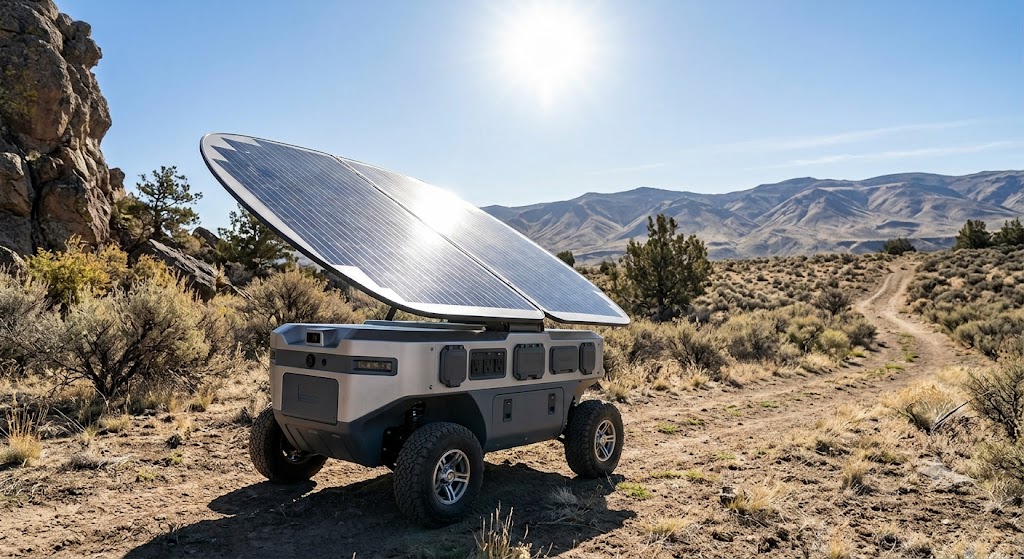
Portable chargers have become part of everyday life, but a new invention from solar power company Jackery takes the idea much further. Unveiled at this year’s Consumer Electronics Show, the Solar Mars Bot is a self-driving battery on wheels designed to follow both the sun and its owner.
The futuristic device can spend the day outdoors automatically tracking sunlight and recharging itself using retractable solar panels that generate up to six hundred watts of power. It can also follow a person around at walking speed, carrying a massive 5kWh power reserve capable of powering phones, laptops, appliances, and even a small cabin for days.
Built for outdoor use, the Solar Mars Bot is waterproof, rugged, and designed to handle demanding environments. Jackery believes it could eventually become a valuable tool for camping, rescue operations, off-grid homes, and van life enthusiasts looking for reliable portable energy.
The Solar Mars Bot has not been released yet, but it offers an exciting glimpse at how technology may change the future of portable power.
Each year on August 19, National Aviation Day celebrates humanity’s long fascination with flight. For centuries, people dreamed of soaring through the sky, from the winged myths of ancient Greece to the kites, gliders, and balloons that slowly brought those dreams closer to reality.
Everything changed in 1903 when the Wright brother achieved the first successful powered flight at Kitty Hawk, North Carolina. In just a few generations, aviation advanced from a twelve second flight to jet travel, moon landings, and reusable rockets designed for future missions to Mars.
Today, every airplane overhead is a reminder of humanity’s endless curiosity and determination to reach farther than ever before.

August is often the hottest and most humid stretch of the year. Even as hints of fall begin to appear, late summer can place extra strain on the body, especially for anyone living with heart disease or high blood pressure. While sunny days and outdoor activities remain part of the season’s appeal, it is important to recognize how extreme heat affects the heart.
As temperatures rise, your heart works harder to keep the body cool. For every degree your body temperature increases, your heart may beat about ten additional times per minute. Healthy hearts can usually manage the extra effort, but for people with cardiovascular conditions or prolonged heat, humidity can become dangerous. Dehydration adds to the strain by thickening the blood and forcing the heart to work even harder. According to the American Heart Association, heat-related cardiovascular risks are expected to increase as summers grow hotter and longer.
The good news is that a few simple precautions can make a major difference. Try to limit outdoor activity during the hottest part of the day, usually between 10 a.m. and 4 p.m. Drink water consistently throughout the day, even before you feel thirsty. Wear lightweight, breathable clothing, and take breaks in shaded or air-conditioned spaces whenever possible. If you take heart or blood pressure medications, speak with your doctor about whether heat may affect how they work.
Late summer is still a season to enjoy, but August is also a reminder to slow down when needed and pay attention to your body. Listening to the signs of heat exhaustion early can help protect your heart and allow you to safely enjoy the final weeks of summer.

August is a season of transition in the garden. The bright energy of summer begins to soften, evenings grow a little cooler, and plants quietly prepare for the arrival of fall. One of the most important late-summer plants is milkweed, a wildflower often overlooked despite the life it supports.
Most famous for hosting monarch butterfly caterpillars, milkweed is the only plant monarchs rely on to lay their eggs and feed their young. By August, its leaves are often covered with striped caterpillars preparing for transformation. Milkweed also protects them naturally through compounds called cardenolides, which make the monarch less appealing to predators.

But monarchs are only part of milkweed’s story. Bees, moths, birds, and countless pollinators depend on their fragrant lavender blooms and nourishing habitat. As summer winds down, the flowers give way to seed pods that eventually burst open, sending silky seeds drifting through the warm late-summer air.
Milkweed reminds us that some of the most valuable things in nature are often the easiest to overlook. As August bridges the fullness of summer with the approach of autumn, it offers a quiet reminder that growth, change, and renewal are always happening just beneath the surface.
Late summer has a way of slowing us down enough to notice the details we may have missed earlier in the season, from drifting seed pods to the steady work of pollinators preparing for what comes next.
In many ways, gardens in August are not simply winding down. They are preparing, adapting, and carrying the beauty of one season forward into another.
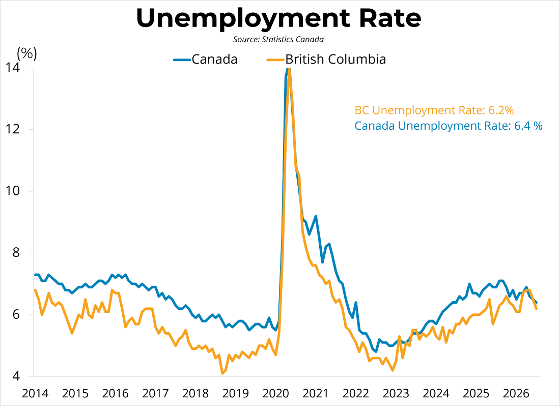
Canadian employment expanded significantly from the previous month, with the economy gaining 75,000 jobs (+0.4 per cent) to 21.215 million in July. The employment rate rose 0.1 points to 60.9 per cent, while the unemployment rate fell 0.1 points to 6.4 per cent. Average hourly wages rose 2.8 per cent year-over-year to $37.17 in July.
Employment in B.C. increased by 0.6 per cent to about 2.955 million, with the provincial economy gaining over 17,800 jobs in July. Employment in Metro Vancouver rose by 0.5 per cent to 1.707 million. The unemployment rate in B.C. fell by 0.3 points to 6.2 per cent, while Vancouver's unemployment rate fell by 0.6 points to 6.0 per cent in July.
July’s jobs report marks a third consecutive month of employment growth, with the economy gaining over 180,000 jobs during that time. Moreover, about 80 per cent of this tally came from private sector job growth, while the unemployment rate fell to its lowest level since July 2024. Altogether, Canada has gained about 68,000 jobs on a cumulative basis in 2026, climbing above zero for the first time this year. We expect the Bank of Canada to continue looking through the Iran conflict and US tariffs by holding the overnight rate at its current level through 2026. However, strong recoveries in the labour market and economy encourage an eventual move back to the Bank’s midpoint of 2.75 per cent in 2027.
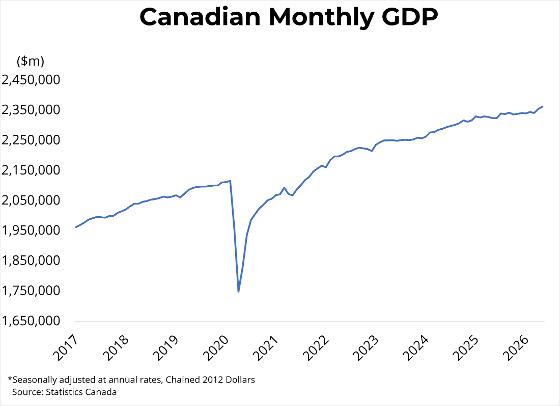
Canadian real GDP grew by 0.3 per cent in May after increasing by 0.6 per cent in April. Goods-producing sectors rose by 0.6 per cent, while service-producing industries rose by 0.2 per cent from the previous month. Industry contributors to growth were led by mining, quarrying, and oil and gas extraction (1.0 per cent), construction (0.8 per cent), and public administration (0.6 per cent). Output for the offices of real-estate agents and brokers rose by 5.1 per cent month-over-month. Preliminary estimates suggest that real GDP by industry increased by 0.2 per cent in June. Taking this estimate into account, real GDP is forecasted to grow by 3.4 per cent on an annualized basis in the second quarter, surpassing the Bank of Canada’s expectations.
May’s report marks a second consecutive month of strong GDP growth, suggesting a sharp rebound in the Canadian economy after contracting for two consecutive quarters. Combined with two straight months of employment growth and enduring strength in consumer spending, the economy is demonstrating resilience in the face of global uncertainties. While a strong GDP print in the second quarter is unlikely to move the Bank of Canada from the sidelines, it does reinforce a slight tightening bias as the Bank looks to bring its policy rate back to the mid-point of its neutral range at 2.75 per cent. However, that bias is weighed against continued geopolitical volatility and tariff threats from the United States that we think will ultimately keep the Bank sidelined through the end of this year.
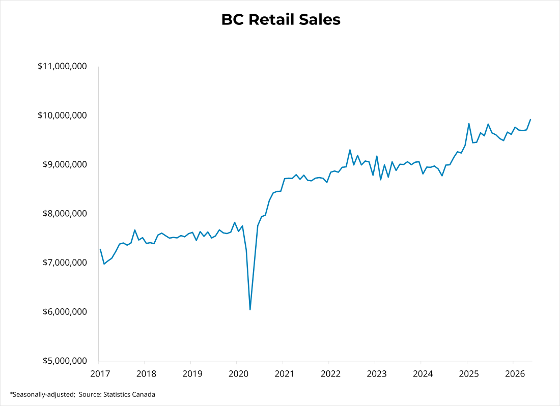
Canadian retail sales increased by 1.0 per cent to $73.7 billion in May compared to the previous month. Retail sales were 5.9 per cent higher compared to the same time last year. Moreover, core retail sales, which exclude gasoline and automobile items, increased by 0.9 per cent in May. In volume terms, adjusted for rising prices, retail sales rose by 0.3 per cent in May.
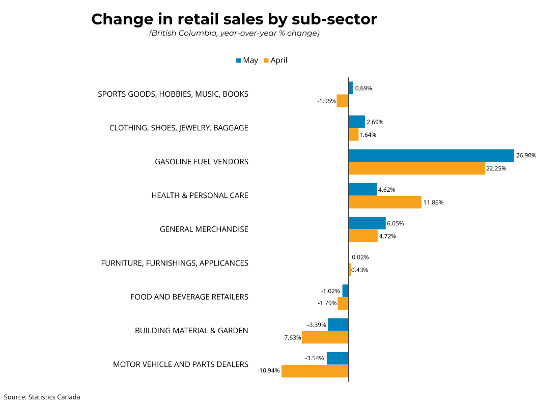
Retail sales in British Columbia were up 2.1 per cent in May month-over-month and rose by 3.4 per cent compared to the same time last year. In the CMA of Vancouver, retail sales were up 3.4 per cent from the prior month and were 1.6 per cent above the level of May 2025.
May’s report illustrates the resilience of Canadian consumer spending throughout the past few quarters, with retail sales growing for a fifth consecutive month despite global and domestic economic turbulence. Looking forward, the Bank of Canada will monitor next week’s GDP report in hopes of a strong rebound in the second quarter. Unfortunately, America’s newly threatened tariffs on Canadian exports adds complication to the trajectory of monetary policy. Furthermore, the temporary ceasefire of the Iran conflict has been breached through resumed attacks, causing oil prices to spike over the past two weeks. Facing persistent volatility concerning trade and global oil markets, we expect the Bank of Canada to continue anchoring expectations by holding its policy rate at 2.25 per cent the rest of this year. Nonetheless, the Bank remains ready to alter course depending on how the Iran conflict and these new tariff threats evolve and affect our economy.
Call or Email me today and let's discuss your next home sale or purchase.
 The data relating to real estate on this website comes in part from the MLS® Reciprocity program of either the Greater Vancouver REALTORS® (GVR), the Fraser Valley Real Estate Board (FVREB) or the Chilliwack and District Real Estate Board (CADREB). Real estate listings held by participating real estate firms are marked with the MLS® logo and detailed information about the listing includes the name of the listing agent. This representation is based in whole or part on data generated by either the GVR, the FVREB or the CADREB which assumes no responsibility for its accuracy. The materials contained on this page may not be reproduced without the express written consent of either the GVR, the FVREB or the CADREB.